Ubiquiti LBE-M5-23 | CPE | LiteBeam M5, 5GHz, MIMO, 1x RJ45 100Mb/s, 23dBi (LBE-M5-23-EU)
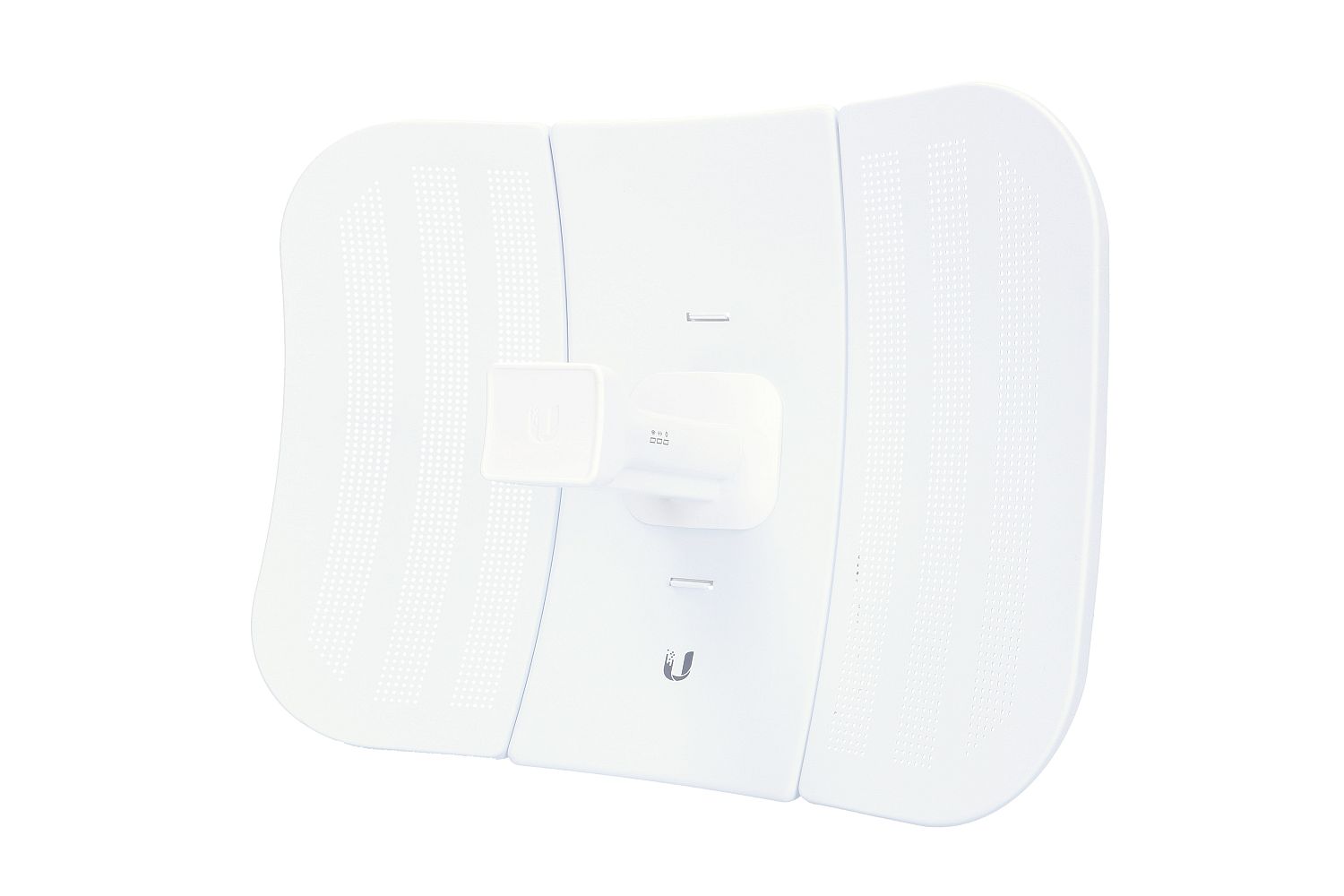
Product images are illustrative. The original product may vary, so please refer to the product specifications in the product description.
Price
€ 55.20The e-shop price may differ with shops price.
Points  +55
+55
Delivery time and options
-
 4-8 days
 -
 4-8 days
 -
 4-8 days
 -
 4-8 days
 -
 4-8 days
Product details
| Product code | LBE-M5-23-EU |
| EAN | 0810354022326 |
Product description
| Operating temperature (T-T) | -40 to 70 °C |
| Maximum data transfer rate | 100,0000 |
| Power supply | 5,5000 |
| Product type | 1x1 SISO |
| LED indicators | yes |
| Connectivity technology | wired |
| Product colour | white |
| Networking standards | ieee_802_11n |
| Antenna gain level (max) | 23,0000 |
| Harmonized System (HS) code | 85176990 |
| Certification | FCC, IC, CE, RoHS |
| Power over Ethernet (PoE) | Tak |
| Dimensions (WxDxH) | 362,0000 |
| Internal memory | 64,0000 |
| Operating relative humidity (H-H) | 5 – 95% |
| AC input voltage | 24,0000 |
| Weight | 750,0000 |
Ubiquiti LBE-M5-23 Ubiquiti WiFi Bridge is the latest installment of Ubiquiti devices, from the sensational airMAX series - technology dedicated to wireless networks. It is an 802.11a/n MIMO 1x1 radio system, working in 5GHz frequency band. The use of InnerFeed solution allowed to integrate the antenna with the radio module and active device.
High gain directional antennaThe LiteBeamM WiFi Bridge provides 23 dBi gain for long-distance links and uses a directional antenna pattern to increase resistance to interference.
Breakthrough industrial designThanks to the freedom of triaxial alignment the LiteBeamM bridge can be mounted in seconds - no tools are needed. Only one wrench is needed to mount it on a pole.
Compact sizeLiteBeamM is a lightweight form contained in an ultra-compact package, ideal for transport and logistics.
LiteBeam M5 works in Router or Bridge modes. The WiFi interface supports the Client, WDS Client modes.The device is compatible with the AirMax protocol, which allows to eliminate the problem of hidden stations by assigning time slots (TDMA) to the devices, where collision-free transmission is possible. It allows to use maximum throughput, even with dozens of client stations connected to an Access Point.